Signals and Systems
 Indefinite Period
 Enroll Now

This course focuses on an introduction to analog and digital signal processing, with an emphasis on filtering, sampling, and system analysis.
Introduction to Signals and Systems
-
Course Description
Course Schedule
-
Curriculum
Course Videos
-
Lecture 1: Introduction
-
Lecture 2: Signals and Systems
-
Lecture 3: Convolution
-
Lecture 4: Properties of Linear, Time-Invariant Systems
-
Lecture 5: Systems Represented by Differential Equations
-
Lecture 6: Continuous-Time Fourier
-
Lecture 7: Fourier Transform Properties
-
Lecture 8: Discrete-Time Fourier
-
Lecture 9: Filtering
-
Lecture 10: Continuous-Time Modulation
-
Lecture 11: Demonstration of Amplitude Modulation
-
Lecture 12: Discrete-Time Modulation
-
Lecture 13: Sampling
-
Lecture 14: Interpolation
-
Lecture 15: Discrete-Time Processing of Continuous-Time Signals
-
Lecture 16: Discrete-Time Sampling
-
Lecture 17: The Laplace Transform
-
Lecture 18: Continuous-Time Second-Order Systems
-
Lecture 19: The z-Transform
-
Lecture 20: Mapping Continuous-Time Filters to Discrete-Time Filters
-
Lecture 21: Butterworth Filters
-
Lecture 22: Feedback
-
Lecture 23: Feedback Example: The Inverted Pendulum
About This Course
Offered by MIT, Signals and Systems provides both a theoretical and practical foundation for the analysis of continuous-time and discrete-time signals and systems. It covers signal processing techniques that play a critical role in numerous fields such as electrical and electronics engineering, communications, image processing, audio processing, defense industries, and consumer electronics.
The course begins with time-domain and frequency-domain representations of signals and systems, and examines in detail the relationships between these representations through the Fourier transform and its generalizations. Concepts such as sampling, modulation, filtering, and feedback in continuous and discrete-time systems are introduced through both theoretical explanations and practical examples.
The content builds a bridge between mathematical representations of signals and real engineering applications. Students gain a conceptual understanding of system analysis while learning how to structure solutions to signal processing problems. Through visual materials and simulation-supported instruction, the course aims to make abstract concepts intuitively understandable.
Prerequisites
Participants are recommended to have basic knowledge of mathematical analysis (particularly differential equations and complex numbers) and familiarity with fundamental signal processing concepts.
Instructor
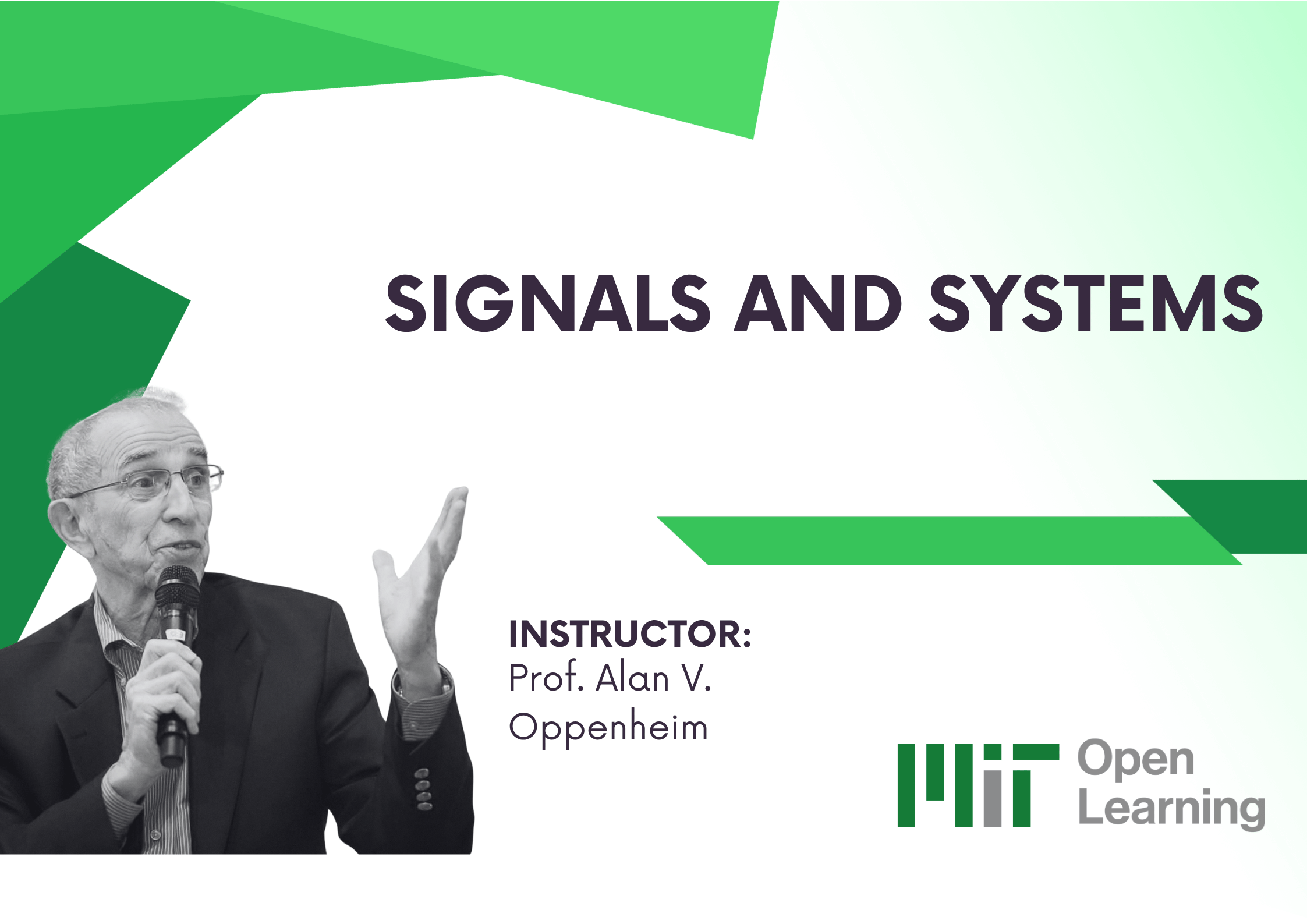
Prof. Alan V. Oppenheim, a world-renowned scholar in the Department of Electrical Engineering and Computer Science at the Massachusetts Institute of Technology (MIT), is one of the leading figures in digital signal processing. His pioneering work has had a significant impact across both academic and industrial communities.
Oppenheim’s teaching approach is distinguished by his ability to present complex technical topics in a clear, intuitive, and visually supported manner. In this course, students have the opportunity to learn the core principles of the field directly from one of its foundational contributors.
-
 4. İlk ProjeKişisel Gelişim
 726
726
 312
312
-
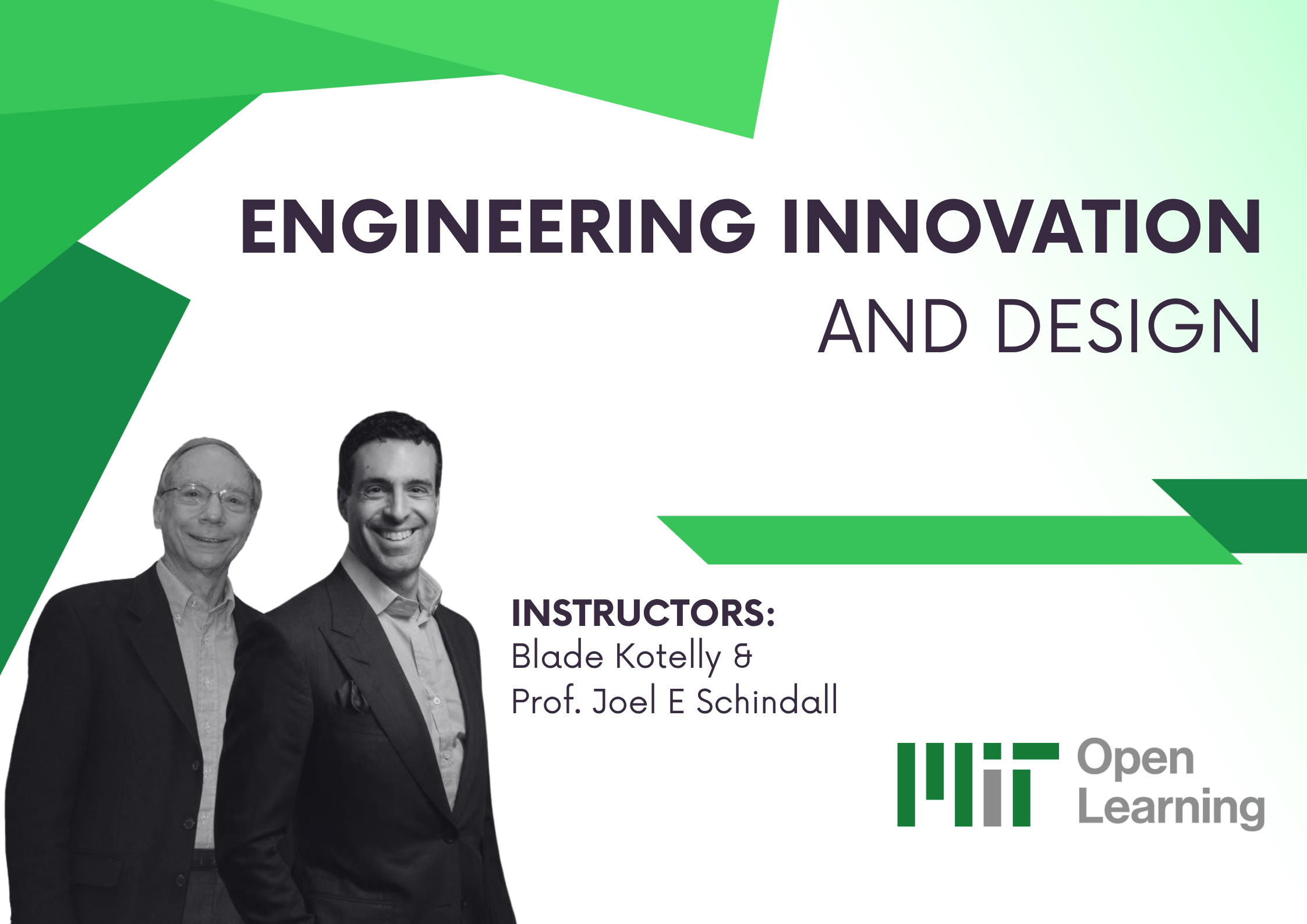 Engineering Innovation and DesignKişisel GelişimThis course, centered on innovation and design, aims to develop creative solutions to engineering problems.
726
312
Engineering Innovation and DesignKişisel GelişimThis course, centered on innovation and design, aims to develop creative solutions to engineering problems.
726
312
-
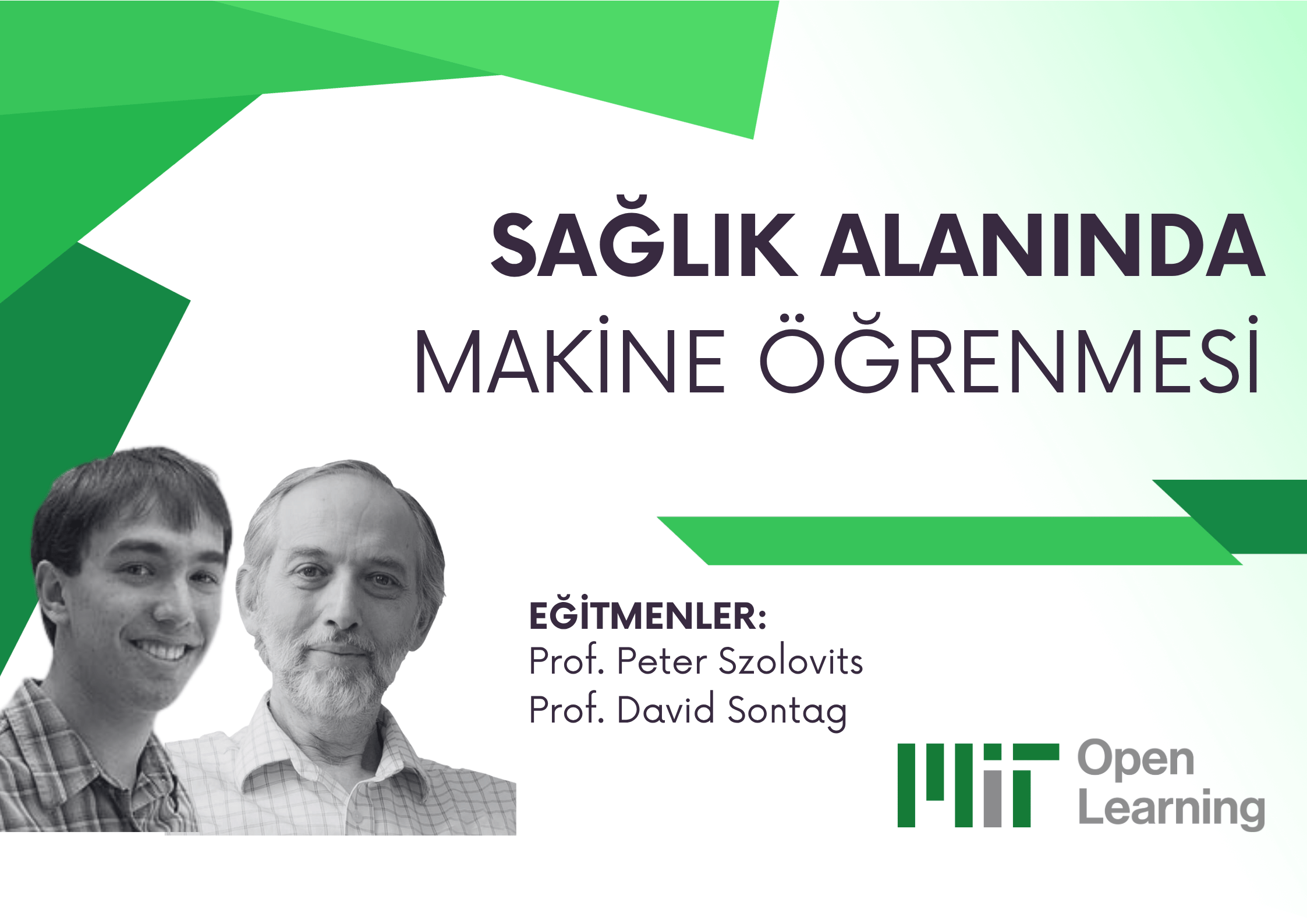 Sağlık Alanında Makine ÖğrenmesiKişisel GelişimMIT’nin bu dersi, sağlık alanında makine öğrenmesini tanıtarak tanı, tedavi ve hasta takibi için veri temelli zeki siste...
726
312
Sağlık Alanında Makine ÖğrenmesiKişisel GelişimMIT’nin bu dersi, sağlık alanında makine öğrenmesini tanıtarak tanı, tedavi ve hasta takibi için veri temelli zeki siste...
726
312
From Eduvence Courses?
-
 Learn at your own pace
Enjoy learning from home without a fixed schedule and with an easy-to-follow method.
-
 Get a front-row seat
With unlimited access, you can watch as many times as you need to perfect your technique.
-
 Watch professionally produced lessons
Eduvence carefully curates its instructor team to provide a high-quality, online learning experience.
-
 Learn from the best professionals
Learn valuable methods and techniques explained by top experts in the creative industry.
-
 Certificates
Receive a certified special certificate for each course. Share it in your portfolio, on social media, or anywhere you want.
-
 Share your knowledge and ideas
Ask questions, request feedback, or offer solutions. Share your learning experience with other students.