Psychology and Economics
 Indefinite Period
 Enroll Now
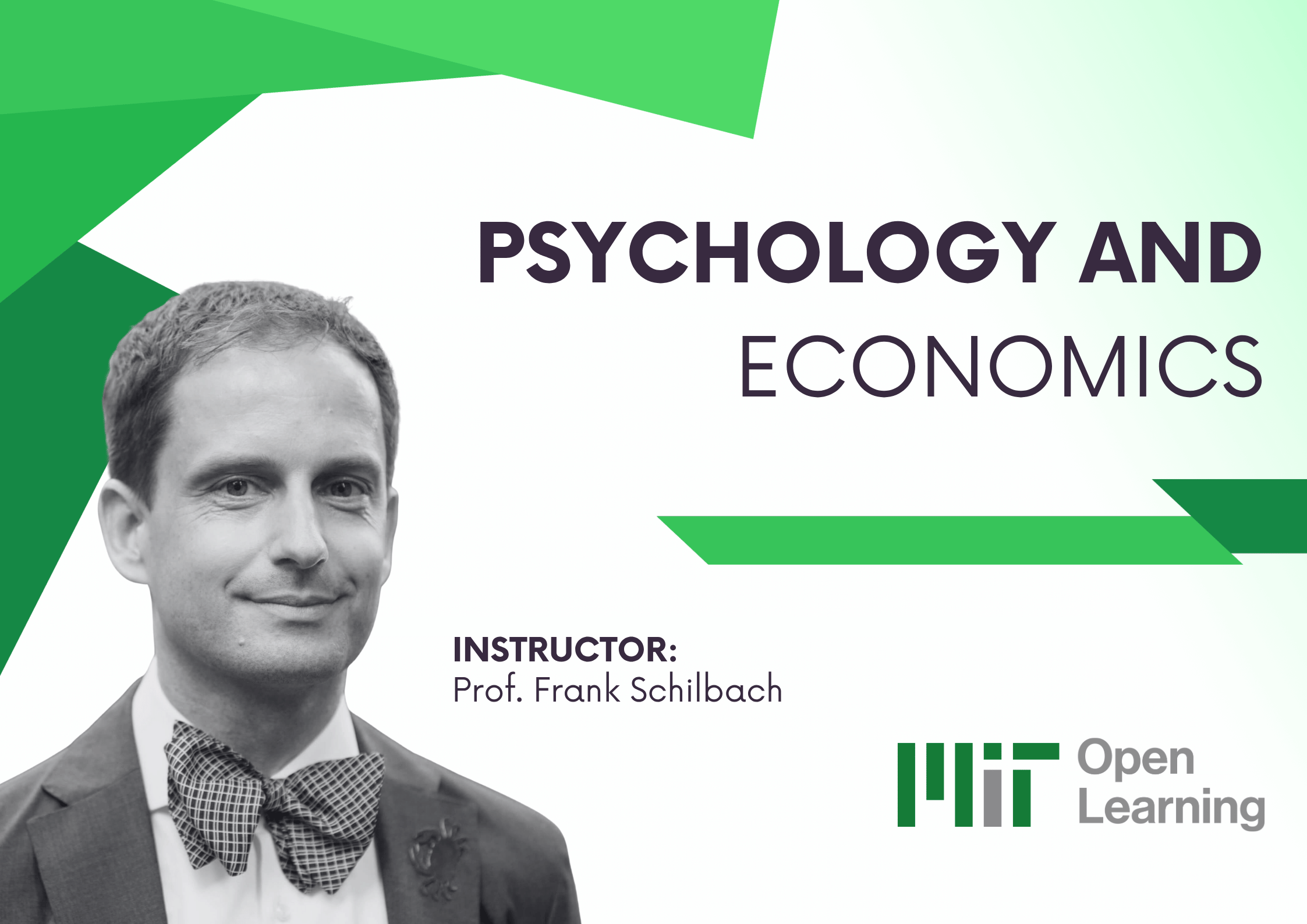

This course examines psychological biases and bounded rationality to develop more realistic policies and analyses in the field of economics.
Introduction to Psychology and Economics
-
Course Description
Course Videos
-
Lecture 1: Introduction and Overview
-
Lecture 2: Time Preferences (Theory)
-
Lecture 3: Time Preferences (Applications)
-
Lecture 4: Risk Preferences
-
Lecture 5: Reference-Dependent Preferences
-
Lecture 6: Social Preferences
-
Lecture 7: Mid-Term Review
-
Lecture 8: Limited Attention
-
Lecture 9: Utility from Beliefs; Learning
-
Lecture 10: State-Dependent Preferences, Projection, and Attribution Bias
-
Lecture 11: Gender, Discrimination, and Identity
-
Lecture 12: Defaults, Nudges, and Frames
-
Lecture 13: Malleability and Inaccessibility of Preferences
-
Lecture 14: Poverty Through the Lens of Psychology
-
Lecture 15: Happiness and Mental Health
-
Lecture 16: Policy with Behavioral Agents
About This Course
This course integrates insights from psychology and the social sciences with economics, moving beyond the traditional assumption of fully rational individuals. It examines systematic deviations in human behavior such as cognitive biases, bounded rationality, and social preferences and applies these findings to labor economics, public economics, health economics, finance, industrial organization, and development economics. The goal is to equip students with both the theoretical foundations and the practical ability to design policies and research incorporating behavioral insights.
Prerequisites
Because this course studies deviations from mainstream economic models, a solid understanding of those models is essential. Therefore, 14.01 Principles of Microeconomics, or an equivalent introductory microeconomics course, is a prerequisite.
Instructor
Frank Schilbach is an Associate Professor of Economics at the Massachusetts Institute of Technology (MIT), specializing in behavioral and development economics. His research explores the cognitive and behavioral dimensions of poverty, examining how “mental stress, sleep deprivation, substance use, and barriers to information diffusion” shape the economic decisions of individuals living in poverty.
Schilbach received his PhD in Economics from Harvard University in 2015. He previously completed a Diploma in Economics at the University of Mannheim and a master’s degree in economics at the University of California, Berkeley.
At MIT, he co-directs the Behavioral Development Lab in India alongside Gautam Rao and Heather Schofield. He is also a Faculty Research Fellow at the National Bureau of Economic Research (NBER) and a research affiliate at J-PAL, CEPR, and BREAD.
-
 Test - Klon - Kuantum Algoritma Yarışmas...Kişisel GelişimKuantum Algoritma Yarışması ön elemesinde katılımcıların teknik yetkinliklerini ölçmek için özel bir sınav hazırlandı.
 726
726
 312
312
-
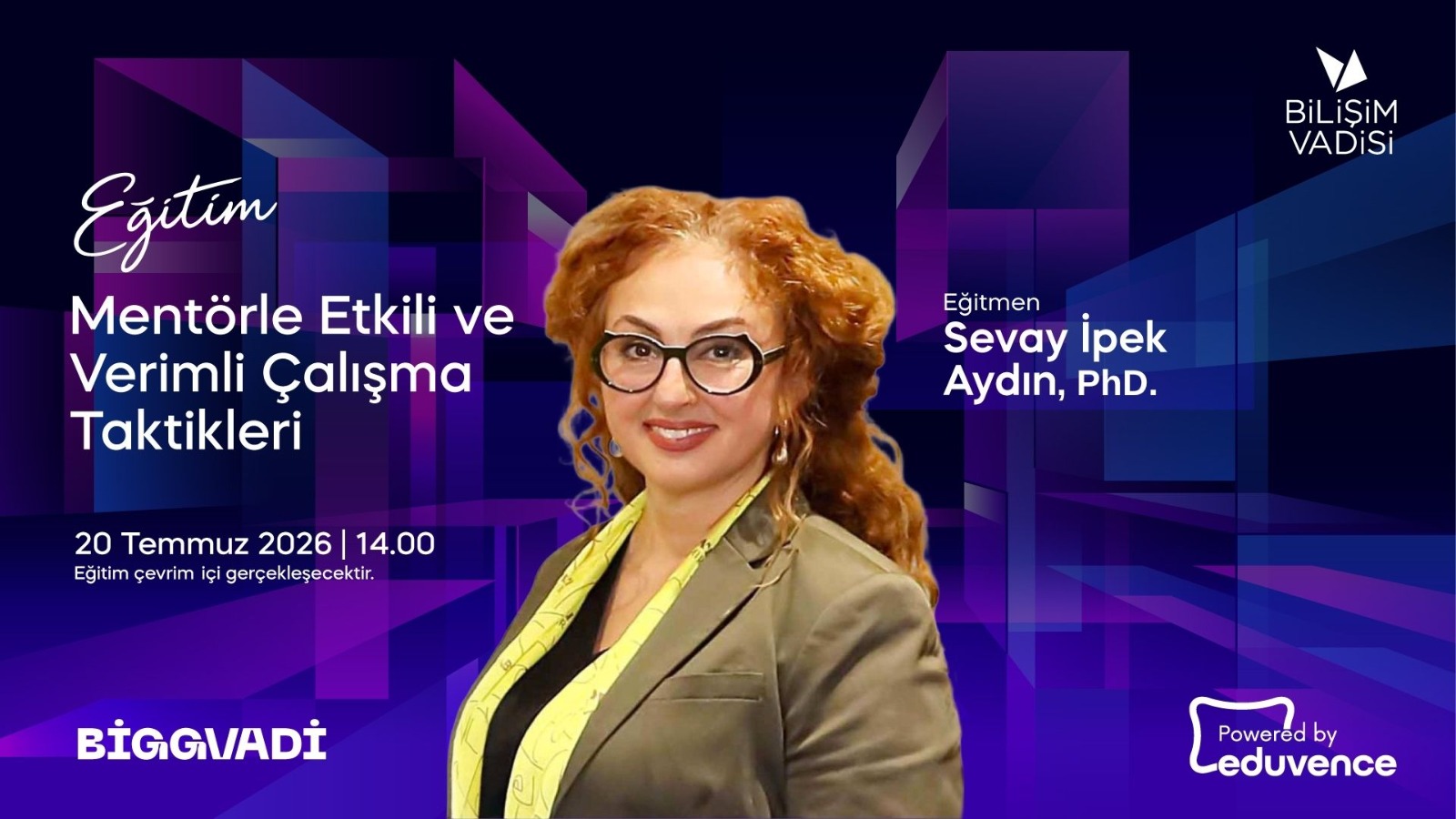 Mentörle Etkili ve Verimli Çalışma Takti...Kişisel GelişimBu eğitim, Bilişim Vadisi BİGG Vadi Programı’na seçilen 2026 girişimcilerine özel olarak hazırlanmıştır.
726
312
Mentörle Etkili ve Verimli Çalışma Takti...Kişisel GelişimBu eğitim, Bilişim Vadisi BİGG Vadi Programı’na seçilen 2026 girişimcilerine özel olarak hazırlanmıştır.
726
312
-
 Oyun PazarlamasıKişisel GelişimBu ders, katılımcılara oyun sektöründe pazarlama, topluluk yönetimi ve iletişim süreçlerini stratejik ve uygulamalı şeki...
726
312
Oyun PazarlamasıKişisel GelişimBu ders, katılımcılara oyun sektöründe pazarlama, topluluk yönetimi ve iletişim süreçlerini stratejik ve uygulamalı şeki...
726
312
From Eduvence Courses?
-
 Learn at your own pace
Enjoy learning from home without a fixed schedule and with an easy-to-follow method.
-
 Get a front-row seat
With unlimited access, you can watch as many times as you need to perfect your technique.
-
 Watch professionally produced lessons
Eduvence carefully curates its instructor team to provide a high-quality, online learning experience.
-
 Learn from the best professionals
Learn valuable methods and techniques explained by top experts in the creative industry.
-
 Certificates
Receive a certified special certificate for each course. Share it in your portfolio, on social media, or anywhere you want.
-
 Share your knowledge and ideas
Ask questions, request feedback, or offer solutions. Share your learning experience with other students.