Introduction to EECS II: Digital Communication Systems
 Indefinite Period
 Enroll Now

Through digital communication systems, the fundamental concepts of EE and CS are taught via abstraction, system design, and algorithms.
Introduction to EECS II: Digital Communication Systems
-
Course Description
Course Schedule
-
Curriculum
Course Videos
-
Lecture 1: Overview: Information and Entropy
-
Lecture 2: Compression: Huffman and LZW
-
Lecture 3: Errors, Channel Codes
-
Lecture 4: Linear Block Codes, Parity Relations
-
Lecture 5: Error Correction, Syndrome Decoding
-
Lecture 6: Convolutional Codes
-
Lecture 7: Viterbi Decoding
-
Lecture 8: Noise
-
Lecture 9: Transmitting on a Physical Channel
-
Lecture 10: Linear Time-Invariant (LTI) Systems
-
Lecture 11: LTI Channel and Intersymbol Interference
-
Lecture 12: Filters and Composition
-
Lecture 13: Frequency Response of LTI Systems
-
Lecture 14: Spectral Representation of Signals
-
Lecture 15: Modulation/Demodulation
-
Lecture 16: More on Modulation/Demodulation
-
Lecture 17: Packet Switching
-
Lecture 18: MAC Protocols
-
Lecture 19: Network Routing (without failures)
-
Lecture 20: Network Routing (with failures)
-
Lecture 21: Reliable Transport
-
Lecture 22: Sliding Window Analysis, Little's Law
-
Lecture 23: A Brief History of the Internet
-
Lecture 24: History of the Internet cont'd, Course Summary
About This Course:
Introduction to EECS II: Digital Communication Systems is designed for students who want to understand the structure and operation of communication systems that form the foundation of the digital age. The course systematically explores the conceptual layers of digital communication systems through the three essential components of information transfer: bits, signals, and packets.
Students learn about time- and frequency-domain representations, superposition, probabilistic analysis, and centralized and distributed algorithms used in communication systems—both theoretically and through practical applications. With programming assignments and experiments on real-world communication channels, theoretical concepts are directly translated into engineering practice.
Throughout the course, students develop not only a solid grasp of digital communication fundamentals but also abstraction skills, system design principles, and performance optimization strategies that form a strong foundation for broader topics in electrical engineering and computer science.
Prerequisites:
This course is suitable for students with basic knowledge of mathematics and physics. Prior programming experience is helpful but not required.
Instructors:
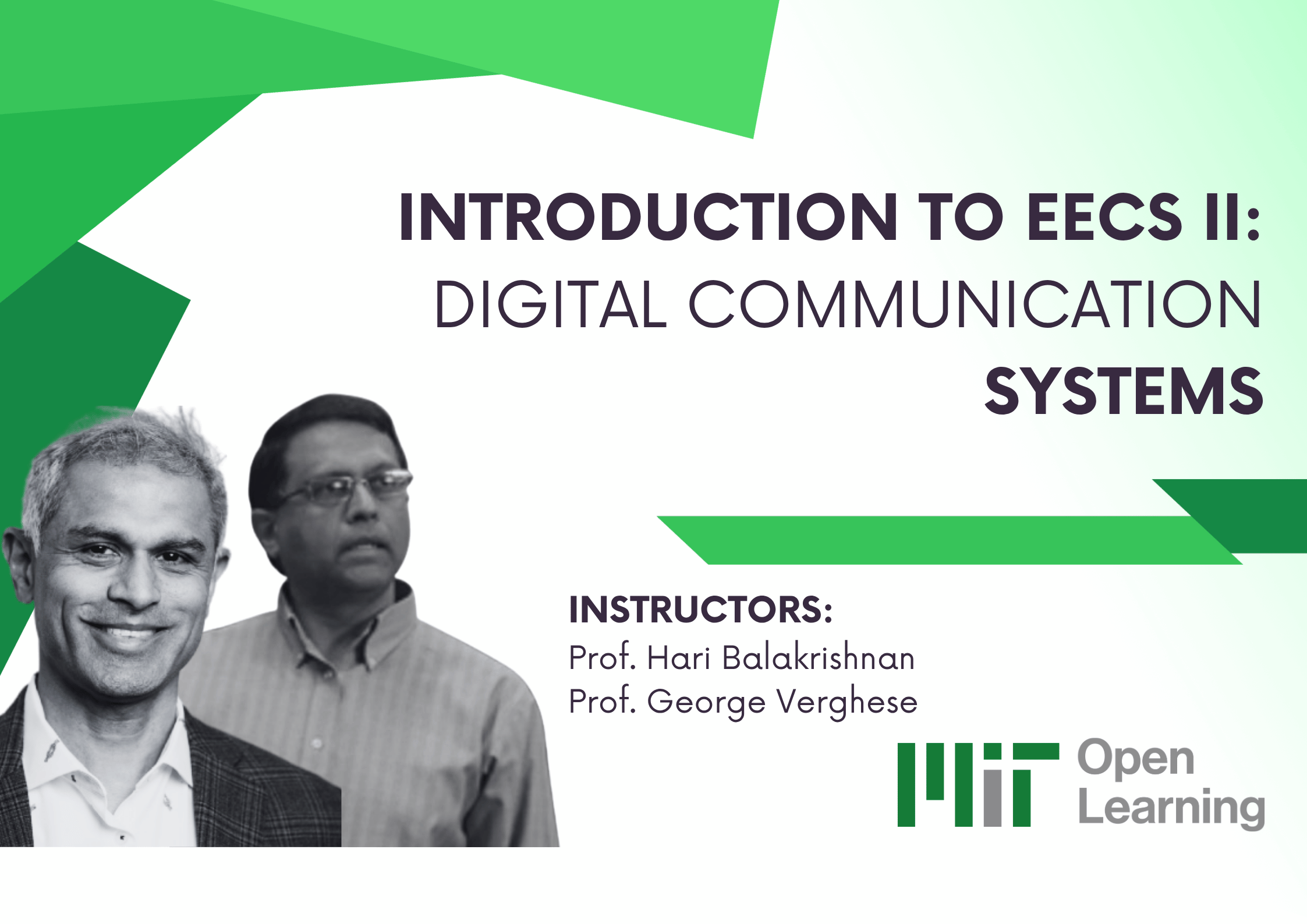
Prof. Hari Balakrishnan is a faculty member in MIT's Department of Electrical Engineering and Computer Science. He specializes in networks, mobile systems, and data transmission. His academic work has made significant contributions to internet infrastructure and reliable communication systems.
Prof. George Verghese is a Professor of Electrical Engineering at MIT. His research focuses on signal processing, system dynamics, and control theory. Well-regarded among students, he is known for his ability to translate theory into practical insight.
-
 Prototype Development and TestingKişisel GelişimLearn prototyping and testing processes to develop your products or services in the most efficient way.
 726
726
 312
312
-
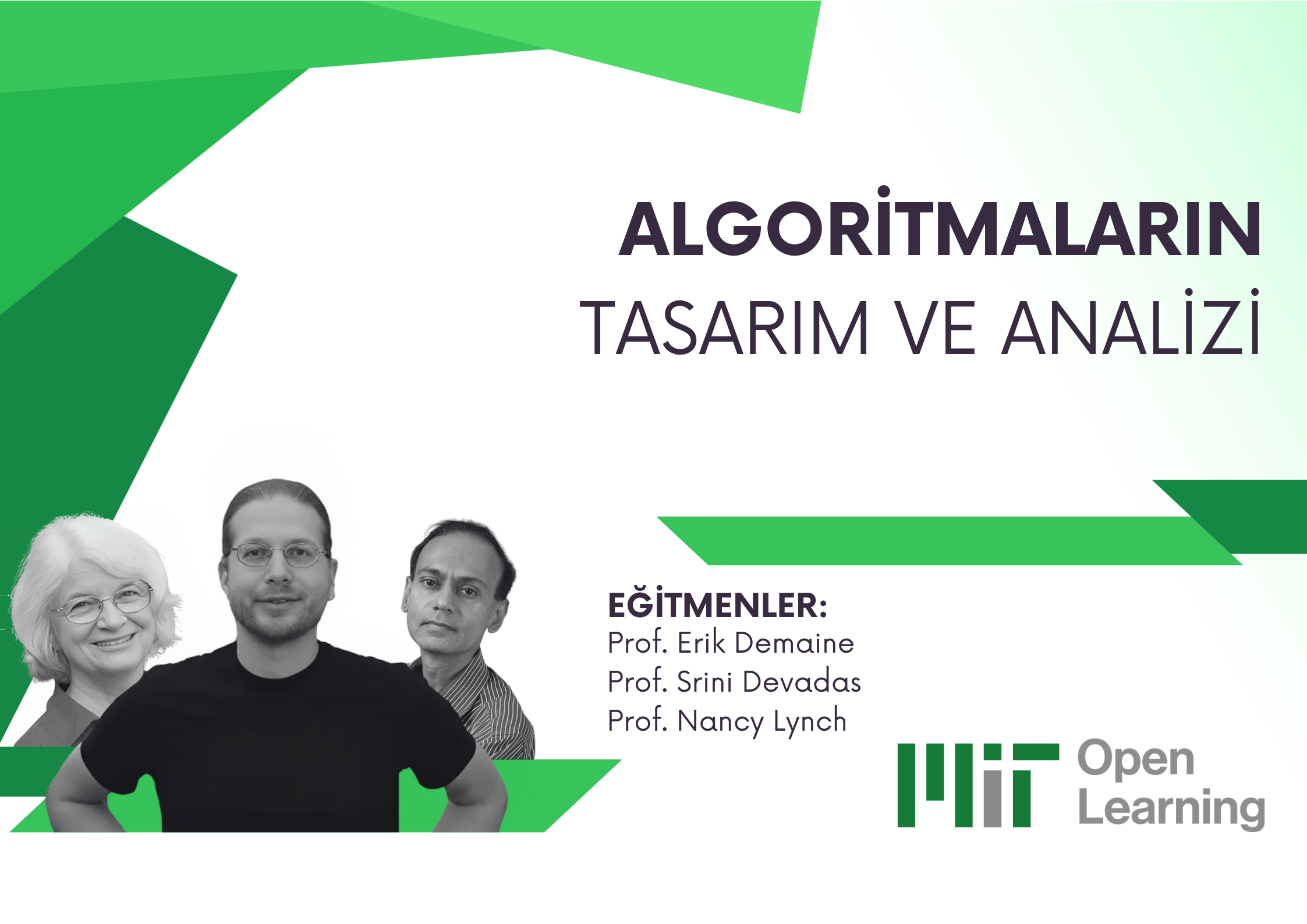 Algoritmaların Tasarım ve AnaliziKişisel GelişimMIT’nin bu dersi, algoritma tasarımı ve analizine odaklanır; verimli çözümler üretmek isteyenler için teorik ve pratik t...
726
312
Algoritmaların Tasarım ve AnaliziKişisel GelişimMIT’nin bu dersi, algoritma tasarımı ve analizine odaklanır; verimli çözümler üretmek isteyenler için teorik ve pratik t...
726
312
-
 Artificial IntelligenceKişisel GelişimIntroduces the foundations of building intelligent systems by teaching knowledge representation, problem-solving, and le...
726
312
Artificial IntelligenceKişisel GelişimIntroduces the foundations of building intelligent systems by teaching knowledge representation, problem-solving, and le...
726
312
From Eduvence Courses?
-
 Learn at your own pace
Enjoy learning from home without a fixed schedule and with an easy-to-follow method.
-
 Get a front-row seat
With unlimited access, you can watch as many times as you need to perfect your technique.
-
 Watch professionally produced lessons
Eduvence carefully curates its instructor team to provide a high-quality, online learning experience.
-
 Learn from the best professionals
Learn valuable methods and techniques explained by top experts in the creative industry.
-
 Certificates
Receive a certified special certificate for each course. Share it in your portfolio, on social media, or anywhere you want.
-
 Share your knowledge and ideas
Ask questions, request feedback, or offer solutions. Share your learning experience with other students.